You know more than your hands can do. You've been stuck for years. YouTube has failed you a dozen times. And you know practicing alone isn't working.
In Just 6 Months, I Can Take You From Stuck In The Pentatonic Box To The Player You Hear In Your Head.
Even if you've been stuck for years. Even if you only have 15 minutes a day.
Even if YouTube has already failed you a dozen times.
Trusted by 1,000+ guitarists across 40+ countries.
Now I'm no longer stuck in the pentatonic box. I can play around the fretboard. He's a world-class player, a very good teacher, and very patient. Definitely worth the money."
-Alan / Tried YouTube, books, other courses
He was really invested in my growth and creativity. He helped with timing, harmony, understanding the fretboard, and how to think creatively within changes."
-MJ / Working musician, 1.5 years with Rotem
Within three months I got really deep into improvisation and jazz. Later I went to study at music school for jazz. Studying with Rotem changed my life."
-Eric / Now studying jazz at music school
One of the biggest myths adult guitarists believe is "if I just learn more licks, it'll click."
It won't.
Ask the player drilling scales for years whose solos still sound generic. Or the one with five half-finished YouTube playlists. Or the one who restarts from the basics every time life gets busy. The problem isn't practicing more. It's practicing the wrong things, in pieces.

The 26-Week was built to solve this.
A sequenced 26-week path that connects what you already know to what you can actually play. Personal feedback from Rotem on your playing every week. A small group of fellow grown-up players walking the same path. And six months of structure where finishing is the default.
It's not about more theory. It's about finally playing what you hear.
I've been playing guitar for some decades but my ability to improvise wasn't really good. Now I've got a much better understanding of the harmonic structure, and the importance of listening has become clear to me again."
– Martin
Decades of playing
Meet your mentor
Rotem Sivan
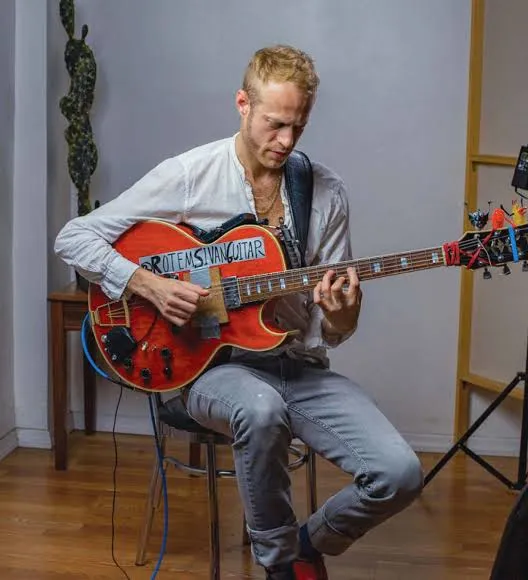
20 years figuring out how grown adults actually become musicians.
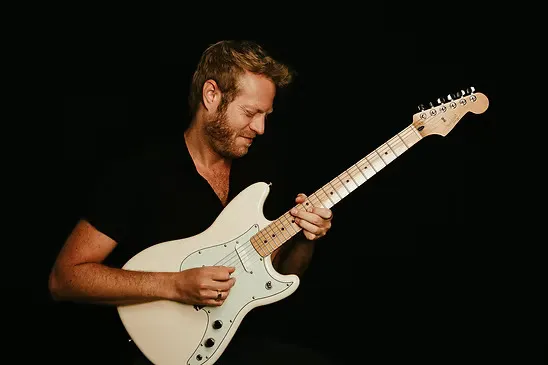
Rotem is an internationally-touring jazz guitarist based in New York City. After 20 years on stages from Blue Note to North Sea, and five albums praised by The New York Times and DownBeat, he's spent the last few years building one thing: a 26-week curriculum for the adult guitarist who has been playing on and off for years and is finally ready to do it the right way.
Jazz Guitarist, NYC
Released 5 albums on top international jazz labels
Toured 30+ countries — Blue Note, North Sea, Smalls
Praised by The New York Times and DownBeat
Trained 1,000+ guitarists across 40+ countries
Here's what you get when you join
The 26-Week Guitar Transformation
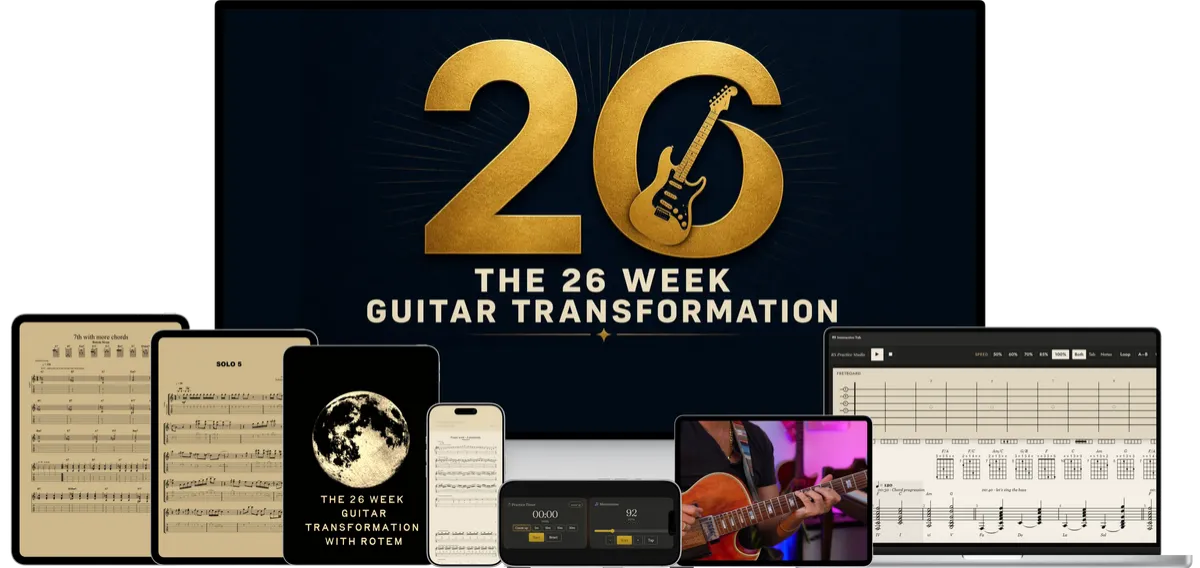
26-week curriculum
200+ short lessons in a sequenced path, so every week builds on the last
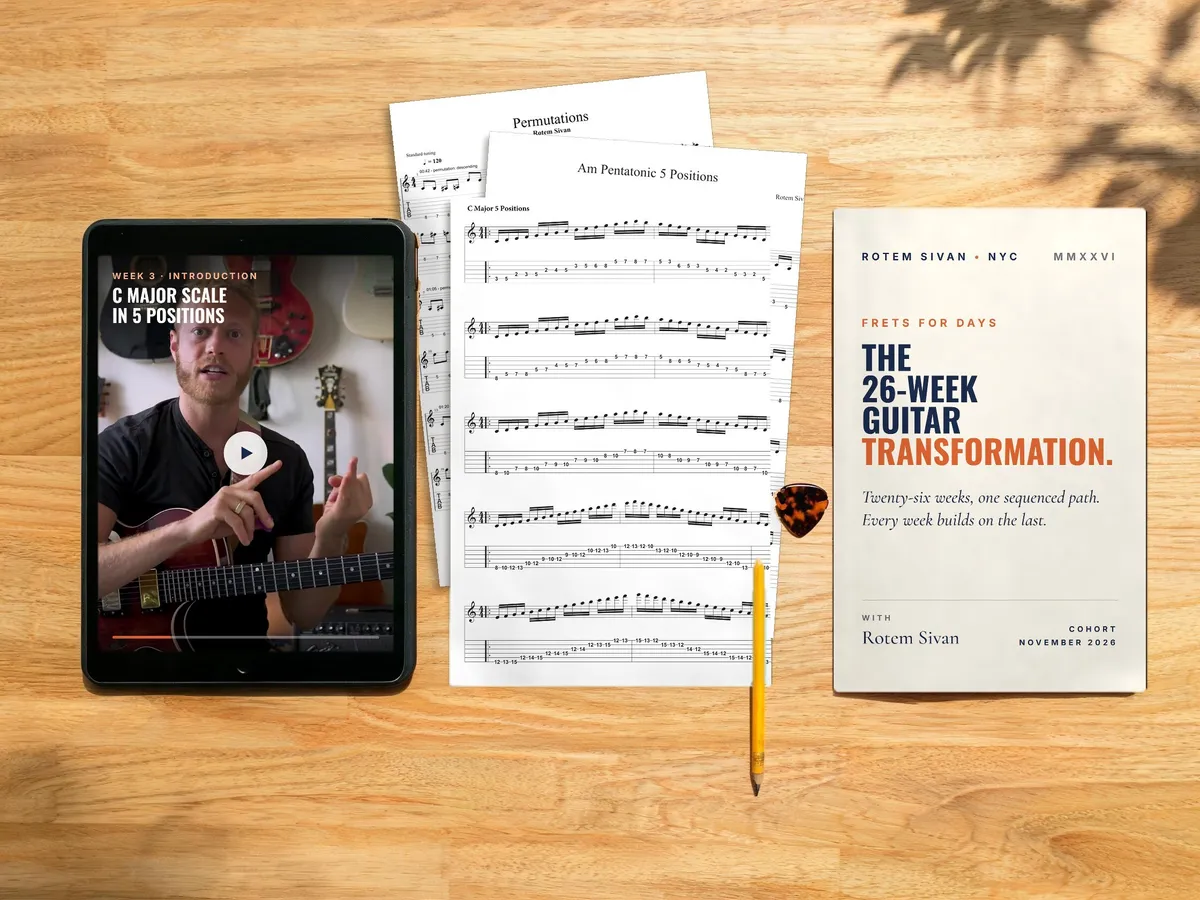
Weekly video feedback
Personal feedback from Rotem on the videos you submit
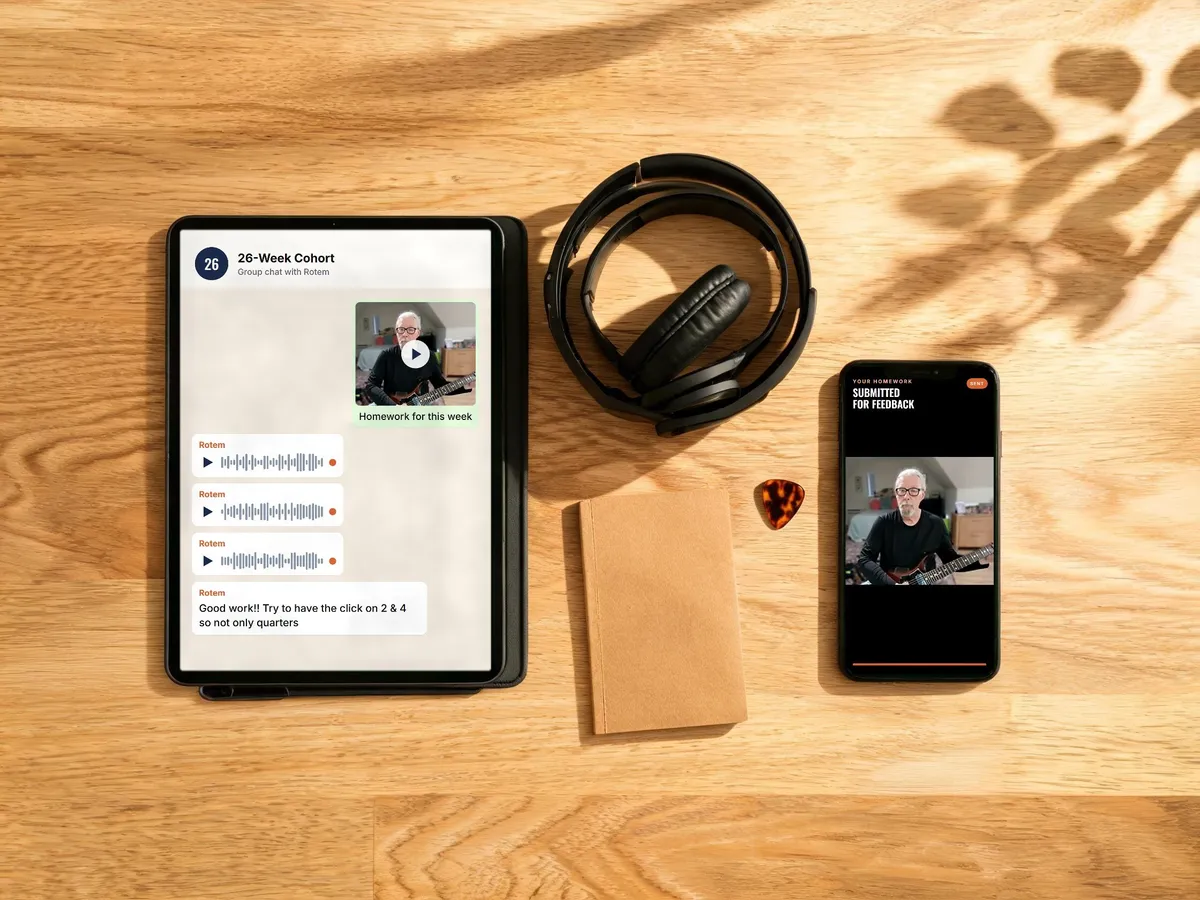
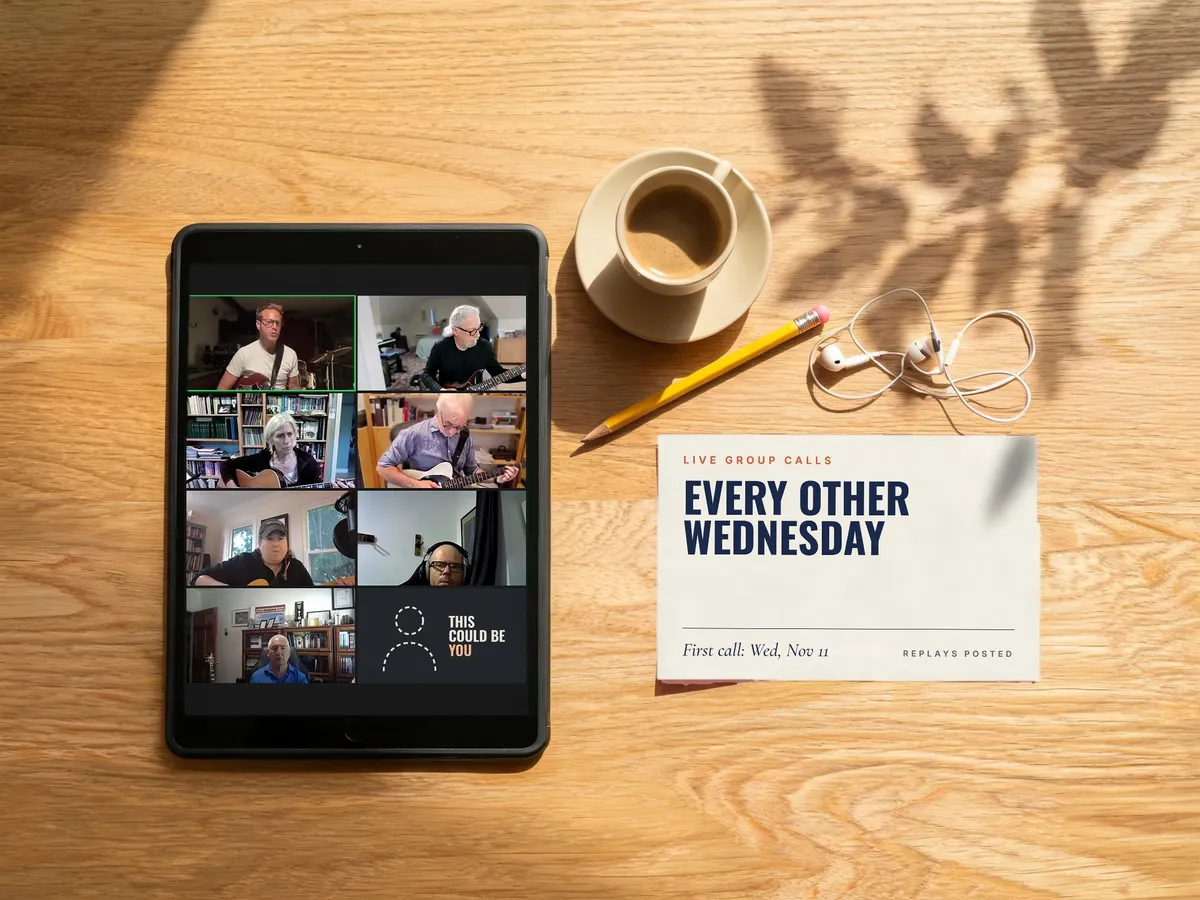
Live group calls
Mentorship calls every other Wednesday. Replays posted
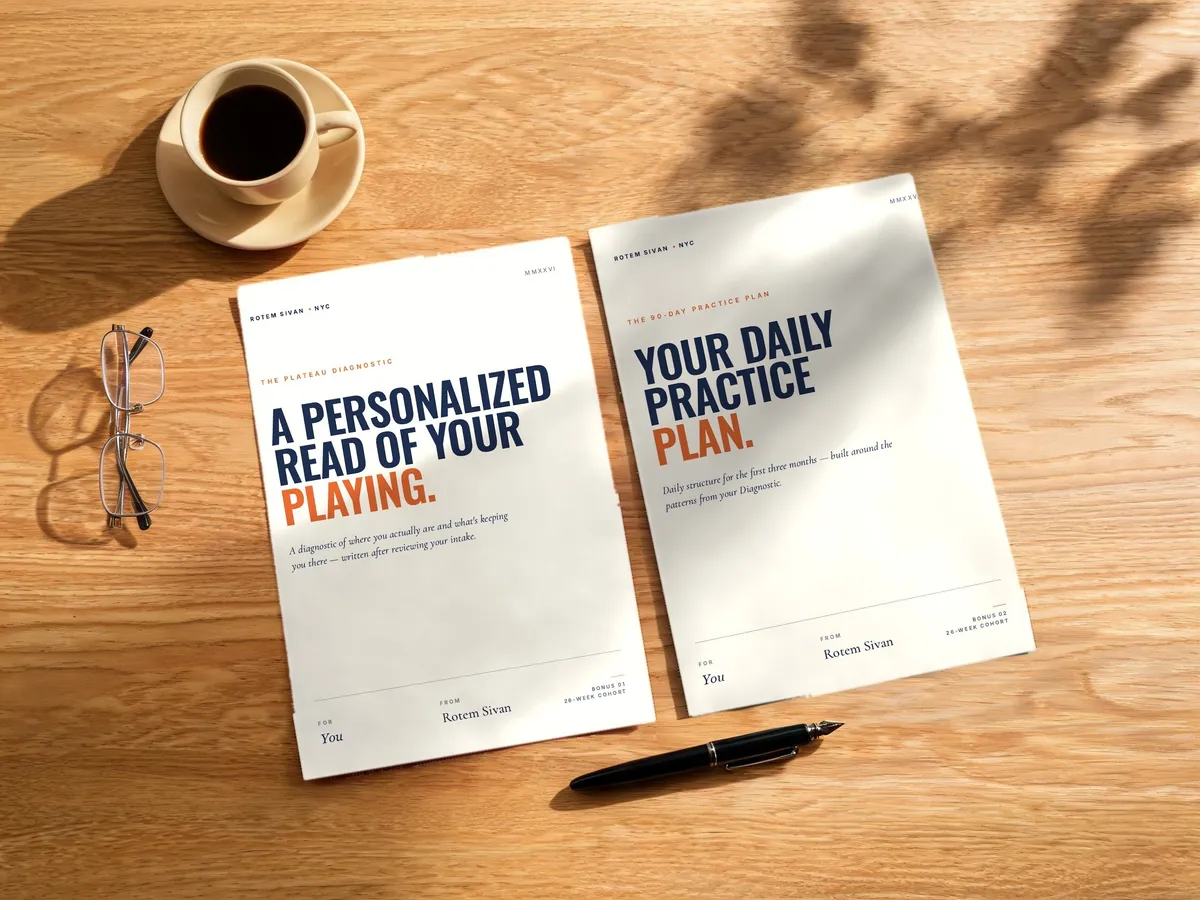
Diagnostic + 90-Day Plan
A personal read of your playing from Rotem, in your inbox within 24 hours
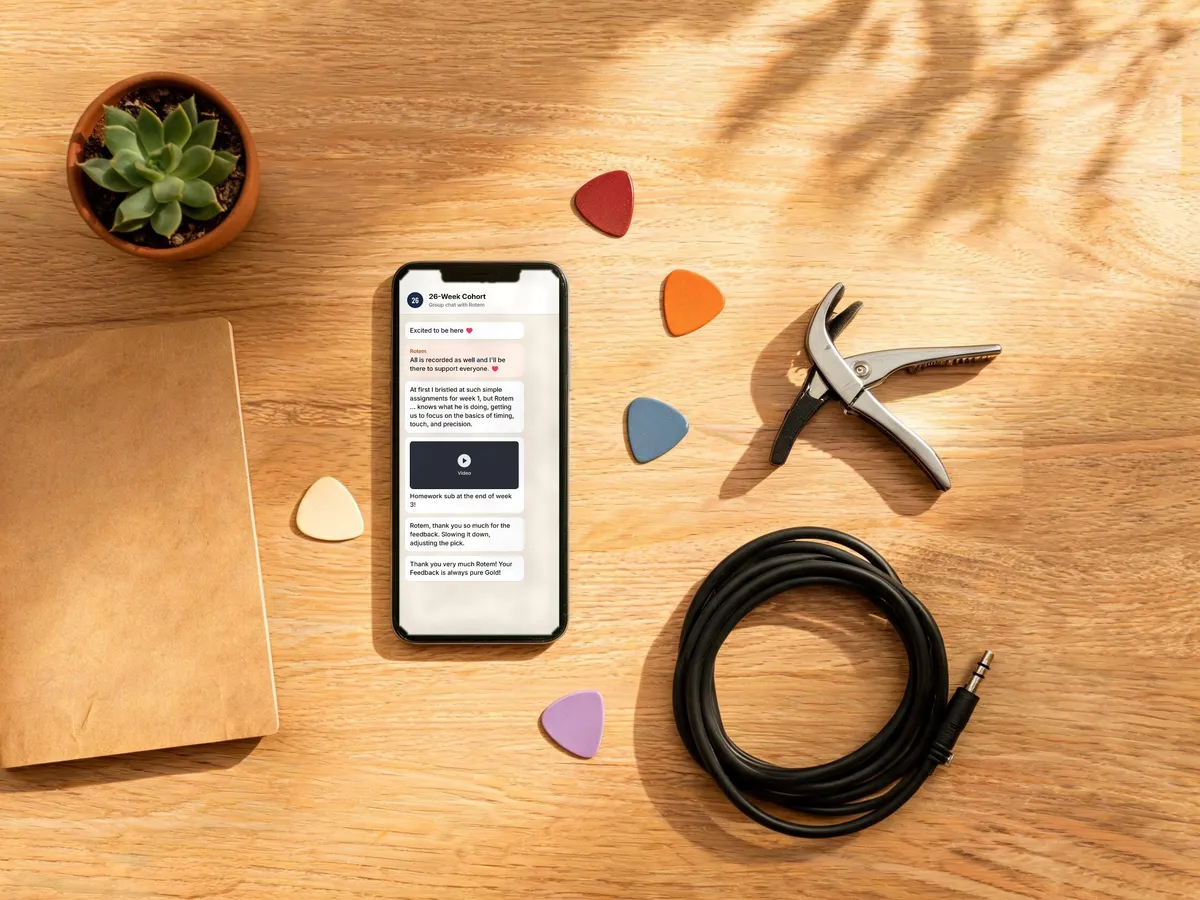
A Small, Private Group
A private community of fellow grown-up players pushing each other forward
Your Next 6 Months. Mapped Out.
No more deciding what to practice. Pick up your guitar. Press play. Progress.
-
Week01
You stop wasting practice. Your picking hand stops fighting you.
What you'll be doing: Daily alternate-picking drills, dynamic-control work, and the deliberate-practice framework you'll use for the next 26 weeks. By Friday, picking feels intentional instead of automatic.
Underlying topic The Practice Mind & The Picking Hand
-
Week02
Your fretting hand finally moves the way it's supposed to.
What you'll be doing: Spider drills, hammer-on/pull-off accuracy work, and the finger-independence exercises classical players swear by. Your weak ring and pinky stop being weak.
Underlying topic The Left Hand: Legato & Finger Independence
-
Week03
The major scale stops being a shape. You hear what it's doing.
What you'll be doing: Build the major scale from scratch using whole-step/half-step logic. Sing the intervals back. You leave the week understanding why each note belongs, not just where it sits on the neck.
Underlying topic The Major Scale & The Theory Underneath It
-
Week04
The pentatonic is yours, anywhere on the neck.
What you'll be doing: All five pentatonic boxes, drilled in every key until your hands know them without thinking. Plus the connective tissue between positions so they stop feeling like islands.
Underlying topic The Pentatonic, In Every Position
-
Week05
You start hearing the next note before you play it.
What you'll be doing: Daily ear-training drills tied directly to the scales you're learning. Sing intervals. Predict the next note in a melody. The first time you hear a solo before you play it happens this week.
Underlying topic Hearing The Scale
-
Week06
You play your first real solo over a backing track.
What you'll be doing: Three backing tracks, one solo per track, weekly video submission for Rotem's feedback. The week most students point back to as the moment it clicked.
Underlying topic First Solos Over Backing Tracks
-
Week07
The whole fretboard opens up under the major scale.
What you'll be doing: Connect all seven major-scale positions into one map of the neck. Walk the scale up and down without a hiccup. The fretboard stops being 12 frets and becomes one continuous landscape.
Underlying topic Major Scale Across The Neck
-
Week08
The pentatonic positions stop being islands. They connect.
What you'll be doing: Linking exercises that smear the five pentatonic boxes into one continuous shape. 24-fret pentatonic runs without breaking at every position shift.
Underlying topic The Pentatonic, Connected
-
Week09
Your solos start sounding like sentences, not noodling.
What you'll be doing: Question-and-answer phrasing, breathing room, target notes, and the four phrasing patterns every great soloist uses. Your solos start having a beginning, middle, and end.
Underlying topic Phrasing Foundations
-
Week10
Melody stops being mysterious. You see how it's built.
What you'll be doing: Identify melodies by interval, not by position. Take a Beatles tune apart, see the melodic skeleton, build your own using the same logic.
Underlying topic Intervals: The Architecture Of Melody
-
Week11
Three notes start sounding like a full arrangement.
What you'll be doing: Major and minor triads in every inversion across three string sets. The voicings session players use to make three notes sound like a string quartet.
Underlying topic Triads & Their Inversions
-
Week12
You play your first real songs, not just chord boxes.
What you'll be doing: Spread triads across multiple strings, then apply them to three real songs: one folk, one rock, one indie. The arrangements sound like records, not campfire.
Underlying topic Open Triads & First Real Songs
-
Week13
Your solos finally have a thread you can follow.
What you'll be doing: Pick one motif. Develop it for 32 bars. The compositional approach to improvising that turns aimless noodling into solos with a story.
Underlying topic Soloing From One Idea
-
Week14
You can take a blues solo that says something.
What you'll be doing: Dissect three legendary blues solos note by note. Build your own using the same vocabulary. Not by copying licks, but by hearing why each note lands.
Underlying topic Inside A Blues Solo
-
Week15
Harmony stops being theory. It becomes ear.
What you'll be doing: Hear the chord change before it happens. Identify I, IV, V, vi by sound rather than by chart. Train the part of your brain that knows what's coming.
Underlying topic Harmony You Can Hear
-
Week16
You solo over changing chords without panicking.
What you'll be doing: The chord-tone-targeting approach. By Friday, you can take a 12-bar blues solo where every chord change is acknowledged in the line. No more "play the pentatonic and pray."
Underlying topic Soloing Through Changes
-
Week17
Every scale is yours, in every position, in every key.
What you'll be doing: Major, natural minor, harmonic minor, melodic minor: all positions, all keys. The week where "I should know my scales better" becomes "I know my scales."
Underlying topic The Scales, Owned
-
Week18
Your timing locks in. People can feel it.
What you'll be doing: Subdivisions, swing feel, syncopation, and the metronome routine that makes your time bulletproof. Drummers stop side-eyeing you.
Underlying topic Rhythm & Phrasing
-
Week19
Lo-fi chord voicings open up under your fingers.
What you'll be doing: Maj7, m9, sus2/4, slash chords. The voicings that make a progression sound like a Mac DeMarco record. Plus the comping patterns that lock them in.
Underlying topic The Lofi Chord Vocabulary
-
Week20
You can play that lo-fi sound, for real.
What you'll be doing: Picking touch, tone, and the slight behind-the-beat feel that turn lo-fi voicings into the lo-fi sound. Includes Rotem's chorus and reverb settings.
Underlying topic The Lofi Sound
-
Week21
Jazz chords stop scaring you.
What you'll be doing: Maj7, m7, dom7, m7b5: every type, every voicing, every inversion. The chord family that opens the door to jazz, soul, R&B, and gospel.
Underlying topic The 7th Chord Family
-
Week22
You can sit in on a jazz standard without freezing.
What you'll be doing: Comp through a jazz standard from a lead sheet using the voicings you built. By Friday, you can sit in on Autumn Leaves at the local jam without faking it.
Underlying topic Jazz Harmony In Practice
-
Week23
Your blues stops being licks. Starts being you.
What you'll be doing: Beyond licks. Into vocabulary that's actually yours. Take three solos over the same backing track, each one distinctly different.
Underlying topic The Blues, Deeper
-
Week24
You play with the touch and feel B.B. King had.
What you'll be doing: Note-bend control, vibrato that breathes, the silence between notes. Reverse-engineering King's signature touch and putting it in your hands.
Underlying topic B.B. King: Phrasing & Feel
-
Week25
Power and touch (the SRV combo) are in your hands.
What you'll be doing: Aggressive picking with controlled dynamics. The texture-and-touch combo that made SRV instantly recognizable. You'll feel it in your hands by Wednesday.
Underlying topic Stevie Ray Vaughan: Power & Touch
-
Week26
You sound like the guitarist you've been hearing in your head.
What you'll be doing: Take everything from the past 25 weeks and make it yours. Compose and record a 90-second piece in your own voice: your first real artifact as the new player.
Underlying topic Becoming The Player You Hear In Your Head
If after two weeks you're not playing better, write me and I'll refund you. There's no downside to trying.
Join the Waitlist for the Next Group
26 week cohort
$397 x 3
3 payments of $397
WHAT YOU’LL GET WHEN YOU JOIN
Complete 26-Week Curriculum, 200+ lessons – ($1,800 Value)
Weekly Video Feedback From Rotem – ($2,600 Value)
Live Group Mentorship Calls – ($1,200 Value)
Private Cohort Community – ($300 Value)
Lifetime Access – ($400 Value)
14-Day Money-Back Guarantee – (PRICELESS)
26 week cohort
$1,197
One Time Payment
WHAT YOU’LL GET WHEN YOU JOIN
Complete 26-Week Curriculum, 200+ lessons – ($1,800 Value)
Weekly Video Feedback From Rotem – ($2,600 Value)
Live Group Mentorship Calls – ($1,200 Value)
Private Cohort Community – ($300 Value)
Lifetime Access – ($400 Value)
14-Day Money-Back Guarantee – (PRICELESS)
26 week cohort + vip access
$2,997
WHAT YOU’LL GET WHEN YOU JOIN
8 Private 1-on-1 Sessions With Rotem – ($1,800 Value)
Complete 26-Week Curriculum, 200+ lessons – ($1,800 Value)
Weekly Video Feedback From Rotem – ($2,600 Value)
Live Group Mentorship Calls – ($1,200 Value)
Private Cohort Community – ($300 Value)
Lifetime Access – ($400 Value)
14-Day Money-Back Guarantee – (PRICELESS)
The November group is full and underway. The next group opens soon, and it stays small.
Join the waitlist and you'll hear first, before anyone else, when doors open. It costs nothing, and there's nothing to decide yet.
Hear It From the People Who Actually Took It
Nick · Wife + 8 kids · 20 min/day
Geoffrey · Family + job · ~1 hr/day
Hillel · 66 · Third Rotem course
Birgit · Singer/songwriter · On week 9
Now I'm no longer stuck in the pentatonic box — I can play around the fretboard. I tried YouTube, books, other courses.
This one was more extensive. He's a world-class player, a very good teacher, and very patient.
Definitely worth the money.”
-Alan · Tried YouTube, books, other courses
Every time we met, he had thought about how to help me become a better player.
He was really invested in my growth and creativity.
He helped with timing, harmony, understanding the fretboard, and how to think creatively within changes.
He enhanced my musicianship quite a bit.”
-MJ · Working musician · 1.5 years with Rotem
I started as a guitarist who could play but lacked some of the basics.
Within three months I got really deep into improvisation and jazz.
I never thought I'd love improvisation so much, but I fell in love with it. Later I went to study at music school for jazz.
Studying with Rotem changed my life.
I just play in a couple of bands. So I play a lot of guitar, but I just feel like I haven't had accountability for what I've been trying to do.
I'll watch a lot of videos and try to incorporate things into my playing — but I really wanted to get some sort of discipline, dedicated time where I'm focusing on stuff and getting feedback and sticking with stuff.
Rather than just saying 'okay, I'm going to play triads today,' and then play it and be done.”
-Eric · Now studying jazz at music school
I'm a chief physician, specialized in cardiology and geriatrics. I'm the chief physician here at the big hospital.
I've been playing since I was 15 — different instruments. My main instrument remains the guitar, and I'm eager to learn.
I've been playing guitar for some decades but my ability to improvise wasn't really good.
Now I've got a much better understanding of the harmonic structure — and the importance of listening has become clear to me again.”
-Martin · Decades of playing
I'm retired and I started playing guitar in my retirement. So I've been learning songs here and there from different sources.
But I never really could tie it together well. Maybe I don't even have a good practice regimen.
So here I am, hoping that you can fix it all for me.”
-Casper · Portland, OR
Most Adult Players Are at One of Three Stages
Foundation Stage
I've been learning songs here and there from different sources. But I never really could tie it together well."
-Casper, Portland
Vocabulary Stage
I really wanted to get some sort of discipline, dedicated time where I'm focusing on stuff and getting feedback."
-Eric, NYC
Voice Stage
I've been playing since I was 15. My main instrument remains the guitar, and I'm eager to learn."
-Martin, Hannover
26 week cohort
$397 x 3
3 payments of $397
WHAT YOU’LL GET WHEN YOU JOIN
Complete 26-Week Curriculum, 200+ lessons – ($1,800 Value)
Weekly Video Feedback From Rotem – ($2,600 Value)
Live Group Mentorship Calls – ($1,200 Value)
Private Cohort Community – ($300 Value)
Lifetime Access – ($400 Value)
14-Day Money-Back Guarantee – (PRICELESS)
26 week cohort
$1,197
One Time Payment
WHAT YOU’LL GET WHEN YOU JOIN
Complete 26-Week Curriculum, 200+ lessons – ($1,800 Value)
Weekly Video Feedback From Rotem – ($2,600 Value)
Live Group Mentorship Calls – ($1,200 Value)
Private Cohort Community – ($300 Value)
Lifetime Access – ($400 Value)
14-Day Money-Back Guarantee – (PRICELESS)
26 week cohort + vip access
$2,997
WHAT YOU’LL GET WHEN YOU JOIN
8 Private 1-on-1 Sessions With Rotem – ($1,800 Value)
Complete 26-Week Curriculum, 200+ lessons – ($1,800 Value)
Weekly Video Feedback From Rotem – ($2,600 Value)
Live Group Mentorship Calls – ($1,200 Value)
Private Cohort Community – ($300 Value)
Lifetime Access – ($400 Value)
14-Day Money-Back Guarantee – (PRICELESS)
Frequently Asked Questions
If your questions aren't listed below, feel free to email us at [email protected]
If you can play barre chords (or you're working on them) and you can strum through a full song or two, you're more than ready. You don't need to be "good" yet. You just need to be past the absolute beginner stage. Most students come in having played on and off for years, sometimes decades, and feel stuck on the intermediate plateau. That's exactly who this is built for. If you've never held a guitar, start with a free beginner course first; you'll get more out of this once you can play through a song.
Rotem's last cohort included a student who came back to guitar after a 50-year break. He's six months in. He sounds like a musician. The body forgets nothing. The discipline you built in your career is exactly what makes adult students faster, not slower.
Many of Rotem's students keep their private teacher and use this in parallel. A weekly private lesson is for the song you're learning. The 26-Week is for the foundation underneath every song you'll ever play. Ask your private teacher to look at the curriculum. Most have written back saying "do it."
However much a day you can give, even if it's 15 minutes. Most days, for a long time, beats a few heroic weekends. The program is built around the schedule of a working professional, not a music student. Students who put in more progress faster, but steady practice beats heroic practice every time.
You get lifetime access to every module, so you can move at your own pace. The cohort calls every two weeks are scheduled, but the curriculum waits for you. Every cohort has students traveling for work, dealing with family, taking weeks off. That's normal.
Replays go up the same day in the student area, so if you miss it live you can watch it that evening. And between calls, you've got unlimited access to me inside the WhatsApp group. That's actually where most of the day-to-day back-and-forth happens. People post clips of what they're working on, ask questions, send the weird voicings they're stuck on. I'm in there almost every day. The calls are the structured time; WhatsApp is where the real practice-room conversation lives.
Rotem is a jazz player at heart, but the program is built around fundamentals that apply to every style. Jazz, blues, lofi, and modern fingerstyle get the most direct treatment, but the foundation underneath them works for rock, country, and everything else. The point is to make you fluent, not pigeon-holed.
YouTube gives you isolated lessons. This gives you a sequenced 26-week path, weekly personal feedback on your actual playing, live mentorship, and a small group of fellow grown adults: the four things free content can't provide.
You're protected by a 14-day money-back guarantee. Do the work for 14 days, and if you genuinely haven't improved, email us and we'll refund you in full. No forms, no hoops.
The November group is full and underway. The group is kept small, so Rotem actually knows your name, your playing, and what you worked on last week, and once a group starts, nobody new joins. Join the waitlist on this page and you'll hear first when the next group opens.
Six months from now, your playing won't be the same.
Everything before today, you were figuring it out alone. It doesn't have to stay that way.
The November group is full. Join the waitlist and you'll hear first when the next group opens.
Copyright © 2026 Frets for Days. All Rights Reserved.
The Legal Stuff! The 26-Week Guitar Transformation is an educational program. Results shown on this page, including student stories and testimonials, reflect the experience of individual students and are not a guarantee of your results. Your progress depends on your starting level, the time you put into practice, and how consistently you follow the curriculum and apply feedback. Testimonials are shared with permission and may be edited for length. All course materials, videos, and resources are for the personal use of enrolled students only and may not be copied, shared, or resold. Live call dates and schedules may change; enrolled students will be notified of any updates. Every enrollment is covered by a 14-day money-back guarantee: if the program isn't right for you, email [email protected] within 14 days of purchase for a full refund.
This site is not a part of the Facebook website or Facebook Inc. Additionally, this site is not endorsed by Facebook in any way. FACEBOOK is a trademark of Meta Platforms, Inc.